Caring & Connecting this Winter
With the onset of cold weather and the holidays around the corner, it’s a good moment to consider the importance of social connection for physical and mental health. Isolation and a lack of social connection can lead to feelings of loneliness which affect people’s mental and physical health.
Elderly women report some of the highest rates of loneliness in Canada. Feelings of loneliness are associated with an increased risk of premature death, cardiovascular disease, depression and dementia.
In response, researchers and care providers across Canada are working to advance our understanding of mature women’s health and the factors that affect it, including social connection. Their work is already helping women to live fuller and healthier lives. Below are just a few examples of that work.
 Dr. Paula Rochon, Founding Director of the Women’s Age Lab at Women’s College Hospital, and Professor of Medicine and Public Health, and Chair in Geriatric Medicine at the University of Toronto, is working to re-envision the aging process at the population-level, particularly for older women who make up the majority of this group. Rochon’s research explores social health challenges facing older adults, highlighting how women and men experience health and healthcare differently.
READ MORE
 Dr. Colleen Norris is the Cavarzan Chair in Mature Women’s Health Research, Lois Hole Hospital for Women, and a member of the Women and Children’s Health Research Institute. Dr Norris is a professor and associate dean of research with the Faculty of Nursing and holds appointments with the Division of Cardiology, the Department of Obstetrics & Gynecology and Medicine, and School of Public Health. She is the past Chair of the Canadian Women’s Heart Health Alliance, Health Policy and Services Working Group. Dr. Norris is internationally recognized for her leadership in sex and gender science and in developing and disseminating evidence informed strategies to transform clinical practice and impact public policy related to women’s health.
READ MORE
 Dr. Rachel Savage, scientist at the Women’s Age Lab and Women’s College Research Institute, Women’s College Hospital, is investigating loneliness and social isolation in older adults to understand how we can improve the health and well-being of our aging population and alleviate demands on our healthcare system. Savage’s work is helping to establish a platform to connect those in public health, healthcare, and the community working to address these issues.
READ MORE
Caring & Connecting this Winter
With the onset of cold weather and the holidays around the corner, it’s a good moment to consider the importance of social connection for physical and mental health. Isolation and a lack of social connection can lead to feelings of loneliness which affect people’s mental and physical health.
Elderly women report some of the highest rates of loneliness in Canada. Feelings of loneliness are associated with an increased risk of premature death, cardiovascular disease, depression and dementia.
In response, researchers and care providers across Canada are working to advance our understanding of mature women’s health and the factors that affect it, including social connection. Their work is already helping women to live fuller and healthier lives. Below are just a few examples of that work.
Dr. Paula Rochon, Founding Director of the Women’s Age Lab at Women’s College Hospital, and Professor of Medicine and Public Health, and Chair in Geriatric Medicine at the University of Toronto, is working to re-envision the aging process at the population-level, particularly for older women who make up the majority of this group. Rochon’s research explores social health challenges facing older adults, highlighting how women and men experience health and healthcare differently.
READ MORE
Dr. Colleen Norris is the Cavarzan Chair in Mature Women’s Health Research, Lois Hole Hospital for Women, and a member of the Women and Children’s Health Research Institute. Dr Norris is a professor and associate dean of research with the Faculty of Nursing and holds appointments with the Division of Cardiology, the Department of Obstetrics & Gynecology and Medicine, and School of Public Health. She is the past Chair of the Canadian Women’s Heart Health Alliance, Health Policy and Services Working Group. Dr. Norris is internationally recognized for her leadership in sex and gender science and in developing and disseminating evidence informed strategies to transform clinical practice and impact public policy related to women’s health.
READ MORE
Dr. Rachel Savage, scientist at the Women’s Age Lab and Women’s College Research Institute, Women’s College Hospital, is investigating loneliness and social isolation in older adults to understand how we can improve the health and well-being of our aging population and alleviate demands on our healthcare system. Savage’s work is helping to establish a platform to connect those in public health, healthcare, and the community working to address these issues.
READ MORE
The Need for Culturally Sensitive Health Care for All Women
Women have unique health needs, but not all women’s needs are the same. Women of colour, Indigenous women, and newcomers to Canada all have different experiences, and may require different kinds of care.
These differences include unequal rates of certain hereditary illnesses, differences in physical proximity to care services, racial and sexual discrimination in the healthcare system, social and cultural barriers that can discourage women from seeking care, and the costs associated with illness and recovery.
Closing the gender-based health gap requires research on the issues that affect women from a range of backgrounds and experiences.
Across the country, WHCC member foundations and teams of dedicated researchers are working to support high quality care for all women by advancing research, and by providing care in a way that is carefully informed and culturally sensitive. Below are a few examples of how WHCC members are providing high quality care that is sensitive to the different needs and experiences of women in Canada.
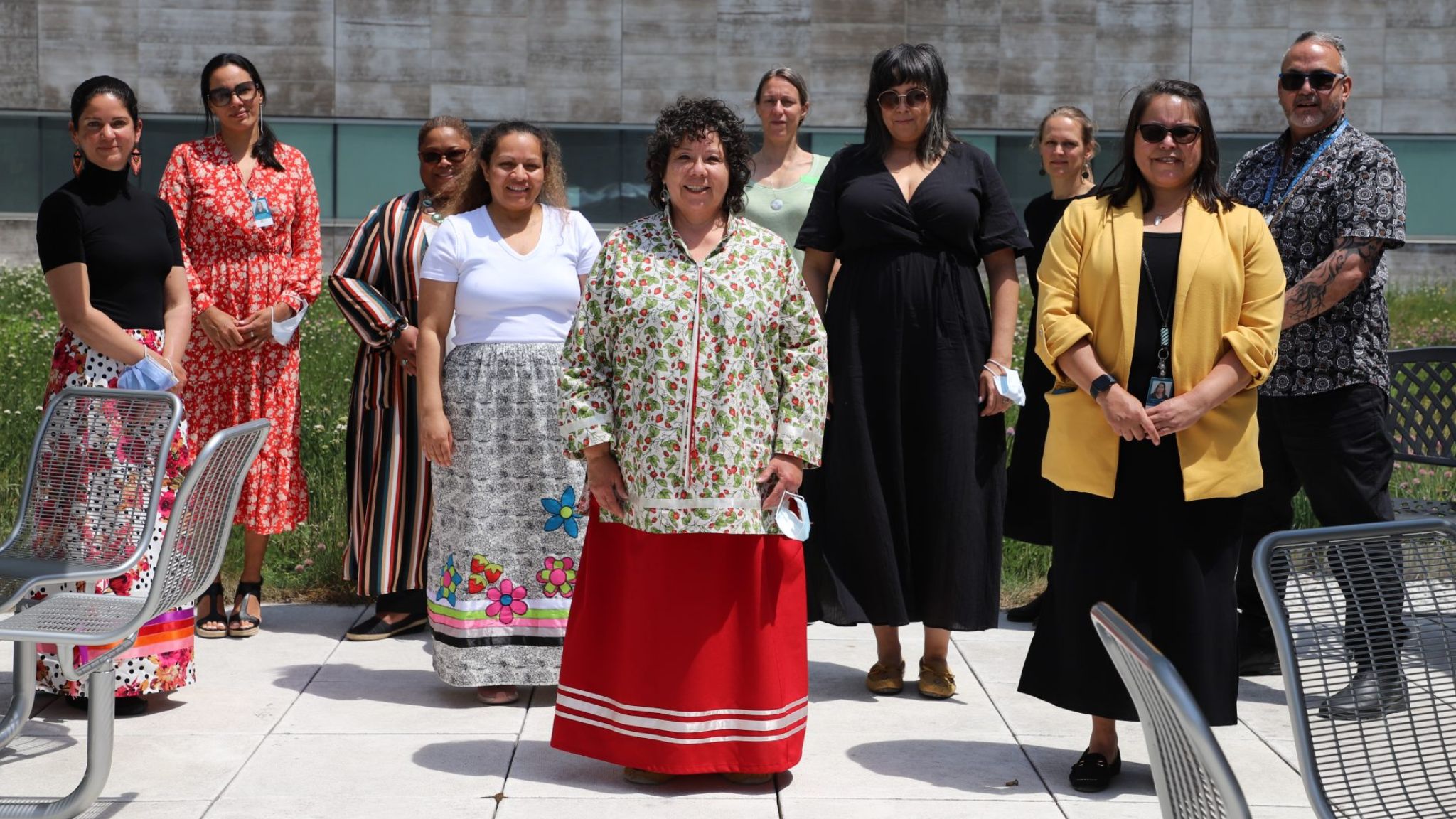 The Centre for Wise Practices in Indigenous Health at Women’s College Hospital is mobilizing and implementing recommendations specific to healthcare and education from the Truth and Reconciliation Commission of Canada: Calls to Action, the UN Declaration on the Rights of Indigenous Persons, and the Final Report from the National Inquiry into Missing and Murdered Indigenous Women and Girls.
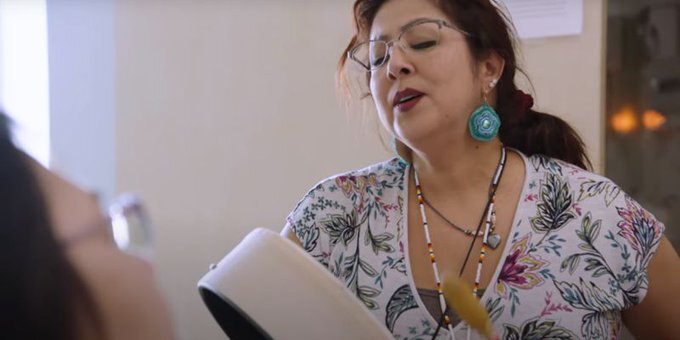 In collaboration with Indigenous community organizations from across Alberta, the NWT, northern BC, and northern Saskatchewan, the Lois Hole Hospital for Women is piloting the Indigenous Cultural Partnership program. This program advocates for equal representation and prioritization of Indigenous health and wellness knowledge systems/practices in sexual and reproductive health alongside the Euro-Canadian approach that is already in place.
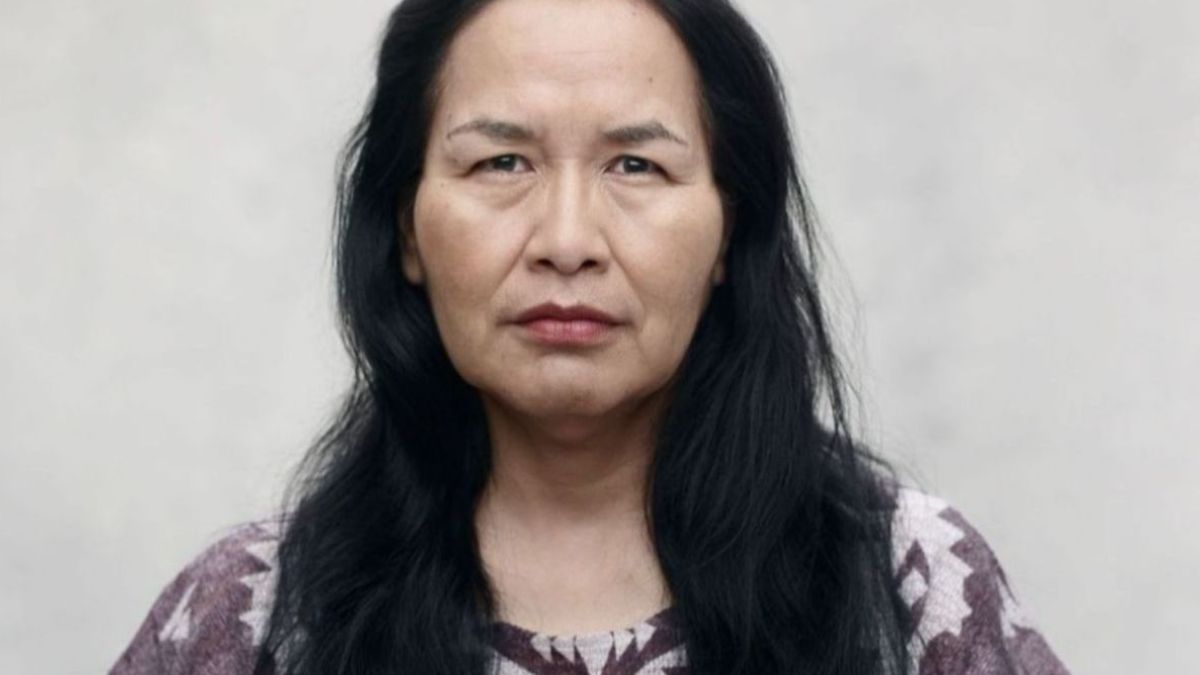 At BC Women’s Hospital + Health Centre, creating a safe, welcoming environment for Indigenous patients and their families while in care is a key goal of the Indigenous Health program. Indigenous patients can seek healing using a traditional approach, enjoy a dedicated outdoor sacred space, and access elder services that provide spiritual care and support.
The Need for Culturally Sensitive Health Care for All Women
Women have unique health needs, but not all women’s needs are the same. Women of colour, Indigenous women, and newcomers to Canada all have different experiences, and may require different kinds of care. These differences include unequal rates of certain hereditary illnesses, differences in physical proximity to care services, racial and sexual discrimination in the healthcare system, social and cultural barriers that can discourage women from seeking care, and the costs associated with illness and recovery. Closing the gender-based health gap requires research on the issues that affect women from a range of backgrounds and experiences. Across the country, WHCC member foundations and teams of dedicated researchers are working to support high quality care for all women by advancing research, and by providing care in a way that is carefully informed and culturally sensitive. Below are a few examples of how WHCC members are providing high quality care that is sensitive to the different needs and experiences of women in Canada.
The Centre for Wise Practices in Indigenous Health at Women’s College Hospital is mobilizing and implementing recommendations specific to healthcare and education from the Truth and Reconciliation Commission of Canada: Calls to Action, the UN Declaration on the Rights of Indigenous Persons, and the Final Report from the National Inquiry into Missing and Murdered Indigenous Women and Girls.
In collaboration with Indigenous community organizations from across Alberta, the NWT, northern BC, and northern Saskatchewan, the Lois Hole Hospital for Women is piloting the Indigenous Cultural Partnership program. This program advocates for equal representation and prioritization of Indigenous health and wellness knowledge systems/practices in sexual and reproductive health alongside the Euro-Canadian approach that is already in place.
At BC Women’s Hospital + Health Centre, creating a safe, welcoming environment for Indigenous patients and their families while in care is a key goal of the Indigenous Health program. Indigenous patients can seek healing using a traditional approach, enjoy a dedicated outdoor sacred space, and access elder services that provide spiritual care and support.
Making Breast Health Better for All Women
October is Breast Cancer Awareness Month in Canada. It’s the moment when we recognize the incredible progress that has been made in our understanding and treatment of breast cancer. It’s also an opportunity to acknowledge that there is a lot more work to be done, and that not all women have benefited equally from these advances.
Over the past three decades, deaths associated with breast cancer have declined significantly. Between 1988 and 2021, breast cancer-related mortality declined by 22 percent in women (and 37 percent in men). Research is driving progress. The work of doctors, scientists, clinicians and researchers across Canada, and around the world, is responsible for the fact that people with breast cancer are more likely to recover, live longer, and lead fuller lives than ever before.
This is something to celebrate. However, breast cancer remains the most commonly diagnosed cancer and the second leading cause of cancer-related death among women in Canada. At the same time, not all women have benefited equally from the progress made overall.
Breast-cancer related mortality has not declined among Black women at the same rate as for others. In part this is because Black women are disproportionately affected by aggressive cancers, such as triple-negative breast cancer (TNBC) and inflammatory breast cancer, both associated with underlying genetic predispositions. Black women and women of colour also continue to face discrimination in the health care system, meaning they may be less likely to seek and receive treatment early on.
Breast cancer research and advocacy today is driven by the understanding women are affected by breast cancer in different ways. The recognition that many women still face social, cultural and economic barriers to care is inspiring new ways of talking about cancer, and how care is provided. That recognition is urging decision makers to ensure that the experiences of women of colour are represented in research, care, and policy related to breast health.
Across Canada, research teams and care providers are advancing breast health for all women, on multiple fronts. Here we are spotlighting a few of the breast health research, care and advocacy initiatives happening at WHCC-member organizations right now.
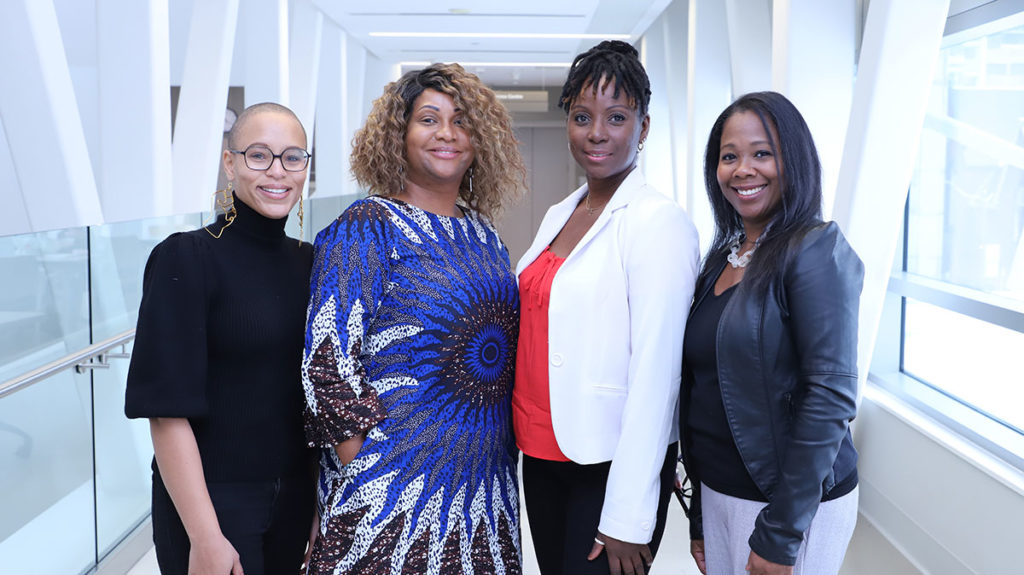 At the Peter Gilgan Centre for Women’s Cancers at Women’s College Hospital in Toronto, an initiative and resource hub is connecting Black women with information about breast cancer, based on the latest research. The Every Breast Counts hub is geared to the unique needs of Black women, and includes resources on potential risk factors, plus information about how to seek care, post-mastectomy breast reconstruction, and more.
The Allard Hereditary Breast and Ovarian Cancer Clinic at the Lois Hole Hospital for Women in Alberta is one of the only centres of its kind in Canada. The clinic provides risk assessment and surveillance for women throughout the province of Alberta who are at a high risk for developing breast and ovarian cancer. Women with genetic mutations to the BRCA1 and BRCA2 genes have an increased risk of developing breast and/or ovarian cancers prior to menopause. The work of the Allard clinic and its staff improves women’s lives by providing early detection mammography, which can be critical.
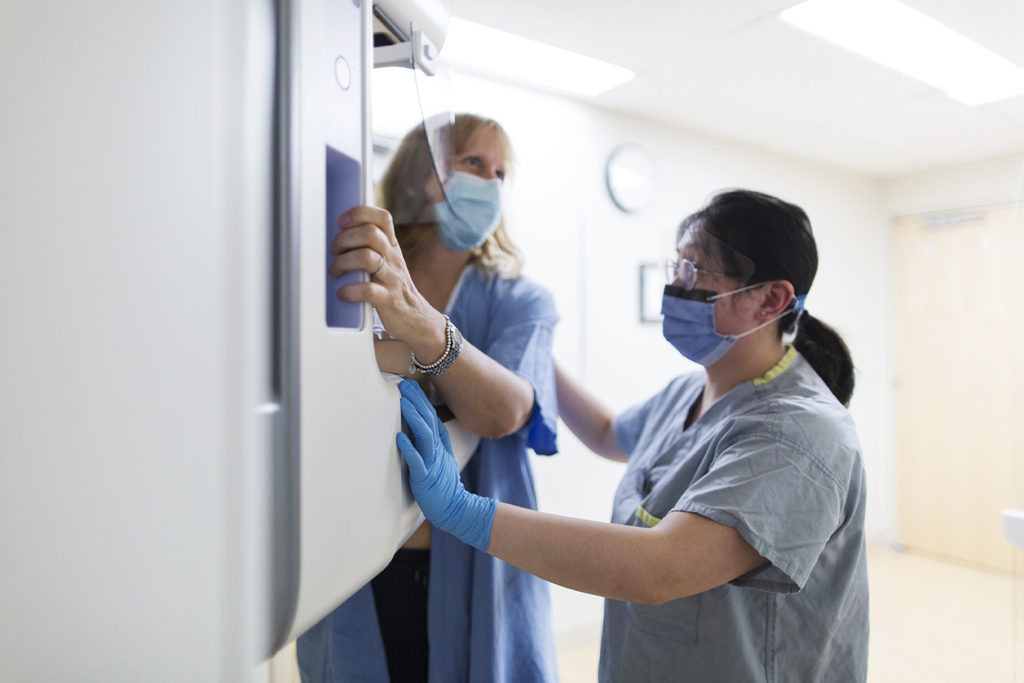 At BC Women’s Health Foundation, the Invest in Breasts campaign is raising money for equipment to improve early detection and prevention of breast cancer. Early detection through regular screening can save lives and help avoid invasive treatments. Screening is reliant on equipment and technology operated by specially trained radiologists and technicians. The goal of the campaign is to equip the Sadie Diamond Breast Health Imaging Centre at BC Women’s Hospital + Health Centre with state-of-the-art diagnostic technology – equipment that will save women’s lives through early detection and prevention.
Advancing Sexual and Reproductive Health Research for All Women
On September 4, the World Association for Sexual Health recognized World Sexual Health Day. That day, and throughout the month of September, people around the world acknowledge the importance of sexual health for all.
Access to sexual and reproductive health services varies greatly among women in Canada. Women who are Black, Indigenous or of colour may experience additional barriers when it comes to receiving adequate care.
Good news is that across the country, researchers associated with members of Women’s Health Collective Canada are working to advance our knowledge of women’s health through cutting edge research, and improving care by turning information into action.
Here we are spotlighting a few of the many researchers working to advance women’s sexual and reproductive health in Canada, and the important work they are doing.
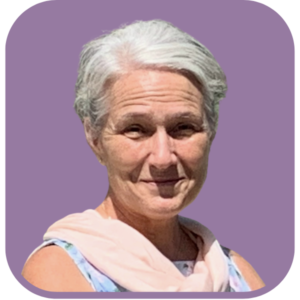
Dr. Wendy Norman, MD, CCFP, FCFP, DTM&H, MHSc, is a Professor in the Department of Family Practice, and an Associate Member in the School of Population and Public Health, and the Department of Obstetrics and Gynaecology, in the Faculty of Medicine at UBC. Dr. Norman founded and leads Canada’s Contraception and Abortion Research Team (CART).
CART conducts research on health policy and services with the goal of enabling equitable access for populations across Canada to the information and care they need to plan pregnancies according to their own reproductive goals. CART research has informed federal, and provincial policies on contraception and abortion services, professional licensing policies, and clinical guidelines.
Dr. Norman’s latest research documents characteristics of the abortion care workforce in Canada after the update of clinical practice guidelines of mifepristone use for medical abortion.

Dr. Carmen Charlton, PhD, FCCM, D(ABMM), a Clinical Microbiologist at the Alberta Public Health Laboratory and an Assistant Professor in the Department of Laboratory Medicine & Pathology at the University of Alberta, is part of a team that is working to better understand the transmission of sexually transmitted infections (STIs) from pregnant people to their babies, and to improve the prenatal care they receive. This research has the potential to reduce infant transmission rates and improve health outcomes and overall care for mothers.
 Dr. Lori Brotto, PHD, R PSYCH, is a professor in the UBC Department of Obstetrics and Gynaecology, and a registered psychologist. She is the executive director of the Women’s Health Research Institute of BC located at BC Women’s Hospital. Dr. Brotto is also the director of the UBC Sexual Health Laboratory where research primarily focuses on developing and testing psychological and mindfulness-based interventions for women with sexual desire and arousal difficulties and women with chronic genital pain.
Dr. Brotto’s latest research and forthcoming book, explores how mindfulness interventions can help women with sexual interest / arousal disorders. Difficulties with sexual desire affect up to a third of women, and most do not get the care they need, due to stigma, embarrassment, and limited availability of treatment. Dr. Brotto’s work not only helps raise awareness of these issues, but gives women and clinicians the knowledge to treat them.
GNC Honours First Year of Partnership with Women’s Health Collective Canada with Donation on International Women’s Day 2022
Company and consumers crowdsourced support for research and wellness across the provinces.
PITTSBURGH (March 8, 2022) – When Women’s Health Collective Canada (WHCC) was created in 2020 it centred on a core premise: to ensure Canadian healthcare is more inclusive and intentional about addressing the needs of women. This mindset resonated with GNC, whose mission is to motivate and support the desire to Live Well. GNC joined WHCC as a partner organization in May 2021 and immediately kicked off a campaign to address two pressing challenges: fundraising and research for women. And today, on International Women’s Day 2022, GNC is proudly donating more than $7,000 to WHCC to help the organization continue to advance its mission.
“We’re deeply grateful to GNC for their generosity and commitment to moving the dial forward in women’s health research,” said Sharlene Rutherford, President and CEO of Alberta Women’s Health Foundation and Foundation Partner, WHCC. “Partners like GNC are also setting a strong example by amplifying the knowledge that, sadly, women’s health research has long been far behind. It’s through these partnerships that we will close the historic gaps that have existed in women’s health research. Together, we’re changing outcomes. We’re changing the trajectory of care for Canadian women.”
Since partnering with WHCC, GNC has enabled consumers to make donations to the Collective at its 50 retail locations in Canada as well as online at GNC.ca. During each purchase shoppers can elect to round-up their final total to benefit WHCC or select a different donation amount altogether.
“We’re delighted to help build awareness of WHCC and how it is positively impacting women’s health initiatives in Canada,” said Nate Frazier, Chief Operating Officer, GNC. “Aligning ourselves with such a dedicated and purposeful organization is part of our mission to Live Well and we are committed to sustaining our partnership in 2022.”
Harnessing the shared influence of BC Women’s Health Foundation, Alberta Women’s Health Foundation and Women’s College Hospital Foundation – all of whom are founding partners of WHCC – the organization reaches and creates a positive impact throughout Canada.
To learn more about GNC, visit www.GNC.ca.
About GNC
GNC is a leading global health and wellness brand that provides high-quality, science-based products and solutions consumers need to live mighty, live fit and live well.
The brand touches consumers worldwide by providing its products and services through company-owned retail locations, domestic and international franchise locations, digital commerce and strong wholesale and retail partnerships across the globe. GNC’s diversified, multi-channel business model has worldwide reach and a well-recognized, trusted brand. By combining exceptional innovation, product development capabilities and an extensive global distribution network, GNC manages a best-in-class product portfolio. www.gnc.com.
About Women’s Health Collective Canada
Women’s Health Collective Canada (WHCC) is a strategic alliance founded by three of the country’s leading women’s health and hospital foundations to raise awareness and funds for equity in women’s health research through unified advocacy across Canada.
Through intentional collaboration, our foundations are bringing resources and fundraising together to address the wider gaps we can’t tackle on our own.
Follow @WHCCanada on Facebook, Instagram, and Twitter.
For further information, please email nicoleh@acteam.ca.
The Rebel Mama Hotline x WHCC
WHCC has teamed up with The Rebel Mama Hotline, hosted by bestselling authors, O.G. mommy-group drop outs and The Rebel Mama founders, Nikita Stanley and Aleks Jassem, to present frank conversations on women’s health topics that deserve some air time.
Give the episodes a listen below!

Season 2, Episode 1 | “What’s Up With Women’s Health?”
What’s causing the gap in women’s healthcare? In S2, Ep1, we share misdiagnoses and missed diagnoses from our audience and discuss the root causes of why women don’t get the care they need. Buckle up ladies, the truth is a hard pill to swallow, but we must make our voices heard.
Thank you to the amazing women who have contributed their stories. You are brave heroes for advocating for yourselves at a time when you really shouldn’t have had to. We respect and appreciate you so much.
This episode was produced in partnership with the WHCC – Women’s Health Collective Canada, a strategic alliance founded by three of the country’s leading women’s health and hospital foundations – BC Women’s Health Foundation, Alberta Women’s Health Foundation, and Women’s College Hospital Foundation in Toronto. WHCC funds groundbreaking research and is leading a call for public support for more research and awareness of the health issues affecting women.
To listen to the episode, click here.

Season 2, Episode 2 | “What’s Up With Menopause & Aging Well?”
Our guest Dr. Sue Ross is a professor and research scientist from the Alberta Women’s Health Foundation who offers a common sense, age positive, and more-often-than-not drug-free approach to menopause and aging well. In this conversation, she tells us what she’s observed in those who cope best with the symptoms of menopause and shares some advice based on her findings. Namely:
1) Create a community. Even 1 buddy is enough! Accept this as just another chapter in your life during which you’re going to want to be surrounded by some solid lady-friends who know what’s up – just like early motherhood.
2) Get walking (if you’re able). Even just 15 minutes a day. But make it a habit to get yourself some fresh air. Breath and movement are always the answer.
3) Figure out exactly what’s bothering you about the experience of menopause. Is it physical symptoms? Mental symptoms? Everyone is different. Deeply considering your own unique experience will help direct you to the help you actually need.
To listen to the episode, click here.

Season 2, Episode 3 | “What’s Up With Maternal Mental Health?”
Our guest, Dr. Simone Vigod, is the head of The Department of Psychiatry at Women’s College Hospital and a leading expert in perinatal mood disorders who has conducted some of the largest studies worldwide on maternal mental illness around the time of pregnancy. Mental illness at this life stage poses unique risks to mothers and their children at a critical juncture in both of their lives. Dr. Vigod’s research is helping raise awareness about gaps in access to specialized perinatal mental healthcare, as well as identifying vulnerable populations where these gaps are most prominent.
Together we discuss maternity and mental health, breakthroughs in women’s mood disorder research that will blow your mind, how anxiety and depression affect moms and their babies, as well as the importance of access to treatments and resources for all.
Read more about Dr. Vigod and access her work here: https://www.womensresearch.ca/scientists/core-faculty/simone-vigod
To listen to the episode, click here.

Season 2, Episode 4 | “What’s Up With Women’s Sexual Health & Fertility?”
Our guest, Dr. Lauri Brotto, is a professor in the UBC Department of Obstetrics and Gynaecology, and a registered psychologist. She is the executive director of the Women’s Health Research Institute of BC located at BC Women’s Hospital and holds a Canada Research Chair in Women’s Sexual Health. She is the director of the UBC Sexual Health Laboratory where research primarily focuses on developing and testing psychological and mindfulness-based interventions for women with sexual desire and arousal difficulties and women with chronic genital pain.
On this episode we will be discussing our favourite topic of all: Sex!
We chat with Dr. Brotto about the pandemic’s effect on sex with a partner (and without), dwindling libidos post-kids (good times), reframing the brain as the main sexual organ (especially for the ladies), arousal and desire in men vs. in women, arousal and fertility, and more!
Read more about Dr. Lori Brotto and her work here: https://brottolab.med.ubc.ca/about/dr-lori-brotto/
To listen to the episode, click here.
Fish Spines & Baseballs: My Experience With “Cording”
Shared by Tamara Bahry
It was the third wave of Covid. I decided to take this time to reset, plunging into a super clean diet and a daily workout schedule.
It was now or never, I told myself. No excuses.
After a particularly challenging arm workout I decided to prepare an Epsom salt bath and give myself the “me time” Covid lockdowns suddenly afforded.
I was achy, waiting to find relief in the steamy tub. The Epson salts were dissolving as I submerged my body into the water, trying to massage my overworked pectorals. Pressing on my left side, I gasped, touching what felt like a walnut under my breast tissue. My hands shook as I clamoured out of the water to call my GP. After describing it, I was told it was likely a fibroid or cyst. A mammogram was scheduled to be safe.
In a surreal moment that seemed like a whirlwind and at the same time forever (because of Covid backups) the results came back — I was diagnosed with breast cancer, invasive ductal carcinoma.
I couldn’t even remember the last time I was really sick. It was years ago, not months. My mind raced to the countless preventative health measures I participated in, the years of breastfeeding. How could this be happening?
Sitting in shock, I was told I had to make the choice between a lumpectomy and mastectomy. I was sent home with two hospital pamphlets. When I asked a question, I was told to refer to the pamphlet.
I hated manuals and avoided them most of my life, and this really wasn’t where I wanted to start.
But I had no choice.
After extensive gene testing I was told my cancer was not genetic, but instead “environmental.”
Environmental? What the hell does that mean? Was I breathing bad air? Eating bad food? Did that cigarette I smoked when I was a teenager behind the 7-11 come back as breast cancer 25 years later? Was it the overwhelming stressors from family life, the paint of my walls that caused a lump in my breast?
I had so many questions, but no answers, and some very serious decisions to make.
I chose a lumpectomy. I learned that in my case, based on my extensive gene testing, my long-term prognosis would likely be the same if I had a mastectomy.
The surgeon removed my tumour as well as four lymph nodes. My post-op instructions included daily arm exercises to reduce swelling and improve circulation to the affected area. Rehab was the focal point of my daily routine, and I was diligent.
Within weeks I started feeling something strange — a tightness under my arm. I was doing some gentle shoulder lifts and noticed what I could only describe as something like a spinal cord bulging from my armpit, accompanied by what felt and looked like a baseball underneath it or a third breast.
I was terrified. Touching my armpit, I recoiled. It felt spiny. What was happening? I had been warned about the possibility of fluid build-up, but I wasn’t prepared for it to feel like a baseball nor the prehistoric-looking ridge above it.
I immediately Googled, “Spinal cord/underarm/lumpectomy.” I discovered I was dealing with a surgical side effect called “cording.” Who knew? It wasn’t in the damn manual.
Cording.
According to Macmillan Cancer Support — “After surgery to remove lymph nodes in the armpit, some women develop cord-like structures under the skin on the inner arm. This is called cording or axillary web syndrome. We do not know exactly why cording happens. It is thought to be caused by inflammation and scarring of the tissues that surround the lymph vessels, blood vessels and nerves.
Cording is fairly common in women who have had most of the lymph nodes removed from the underarm.”
I called the breast clinic the next day and proclaimed, “I have cording,” followed by, “Who do I see?”
The breast nurse advised me to find a local physio.
“A local physio?” I thought to myself, wondering where to even start.
I then said I have a fluid build up. She responded, “Ahh a seroma… Hopefully it will go away. There is nothing we can do.”
After another extensive internet search, I found two women in my city who specialized in cording and lymphatic drainage of seromas, one a breast cancer survivor. I called her first, it was two months before I could see her. The other was a three-month wait.
I couldn’t help but feel sidelined. I was dealing with a well-known, cancer surgery-specific side effect, but could not find treatment through the hospital system, nor was it anywhere in the leaflets I was given.
From my own experience, the treatments are expensive and not covered by OHIP, and from what I understand now, it’s a common side effect. I had another question then: What happens to the people who can’t afford these treatments? Or the people who don’t look on the internet (after all I was told to avoid searching cancer online by my doctors)?
Over the last year I’ve become more familiar with this disease than any lay person would ever want to be. Thankfully I’ve been able to meet with other survivors and navigate the medical system which, in the case of a cancer diagnosis and treatment in the middle of a pandemic, can often result in broken telephone.
What I have also learned in my breast cancer fight is two-fold:
- Every journey is unique. You must self-advocate and ask questions and don’t hesitate to get a second opinion. Doing so drastically changed my treatment plan.
2. Ask for help from other survivors. They are a wealth of support and a resource to draw upon. And if you are able to, look to your own social network. Help can be found where you least expect it, and remember – remember how you counted on others, and be there when you too are called upon.
The Rebel Mama x WHCC #WHYCARE
This blog post originally appeared on The Rebel Mama and is reposted here with permission.
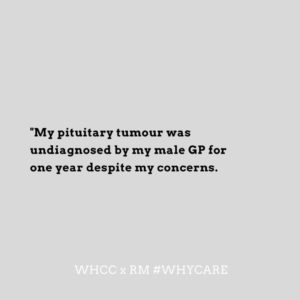
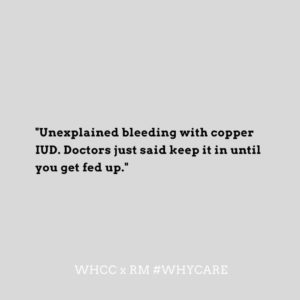
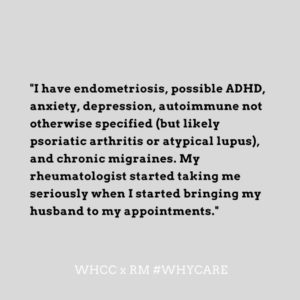
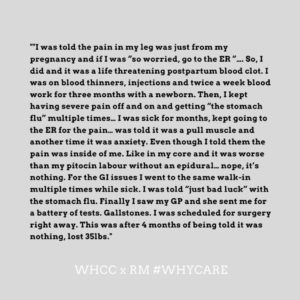
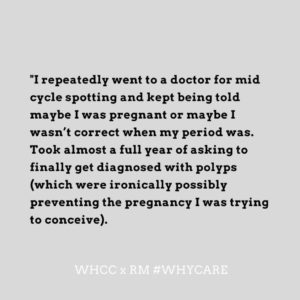
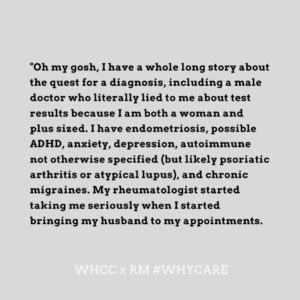
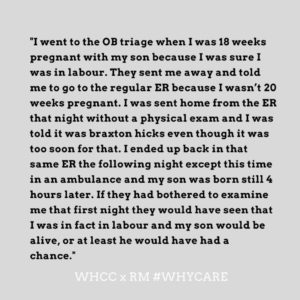
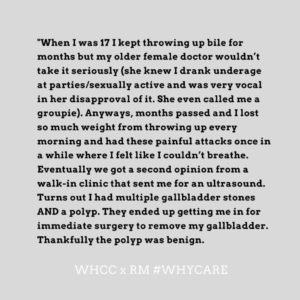
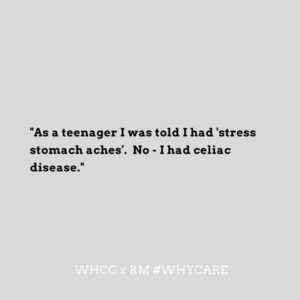
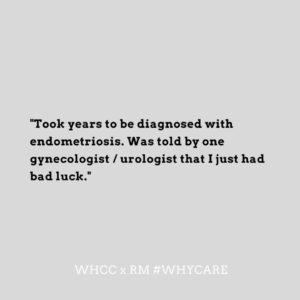
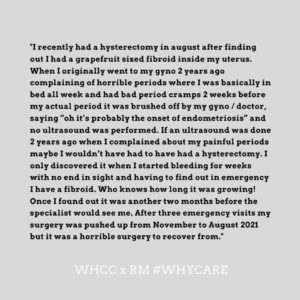
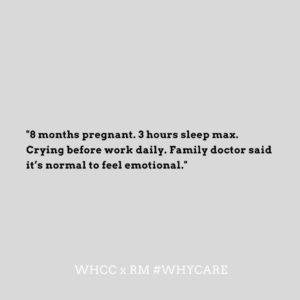
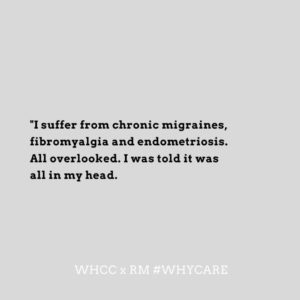
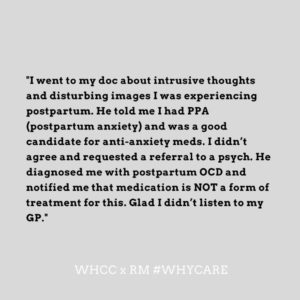
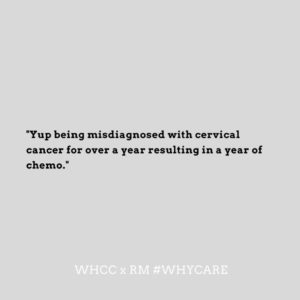
Over the past several years, we’ve been privy to myriad stories from women in our community who did not receive the medical care they needed when they needed it most. Their stories of missed diagnoses and misdiagnoses are part of a phenomenon called the women’s healthcare gap: a term used to describe the disparity in care between female patients and their male counterparts.
So what’s to blame for the healthcare gap? According to the Women’s Health Collective Canada (a strategic alliance founded by three of the country’s leading women’s health and hospital foundations – BC Women’s Health Foundation, Alberta Women’s Health Foundation, and Women’s College Hospital Foundation), it’s caused by a lack of research and awareness of the health issues affecting women.
“Without research, doctors are not equipped. Without research, women’s health experiences are not validated, and without research, women are unable to live their lives to the fullest, participate in our economy, and lead communities.” – Sharlene Rutherford President and Chief Executive Officer Alberta Women’s Health Foundation
The WHCC has set out to increase awareness and research and we’re helping to amplify their call for public support.
Seeing the sheer number of women whose health and wellbeing have suffered due to a lack of understanding of the female body is what made us instant supporters of the WHCC’s mission, so we thought we’d give you a chance to get acquainted with these stories as well. They were all submitted by women in our private forum – their names have been omitted to protect their privacy.