This research confirms what we've always known. Countries, communities, and families are only as healthy as the women within them. Investing in women's health isn't a side issue; it's the foundation for a stronger, fairer, and healthier Canada.
A Vital Opportunity
When women get the care they deserve, everyone benefits
Closing the women's health gap could unlock $37 billion annually — and a stronger, fairer, healthier Canada for all.
The case
A national opportunity
Women’s Health Collective Canada and Desjardins Insurance, with support from Hologic Canada and Organon Canada, are working to raise awareness of the urgent need to invest in women’s health — and the vital opportunity that lies in closing Canada’s women’s health gap.
WHCC and its partners are leveraging new analysis from the McKinsey Health Institute to spotlight the human and economic impact of women’s poorer health outcomes and make the case for further investment.
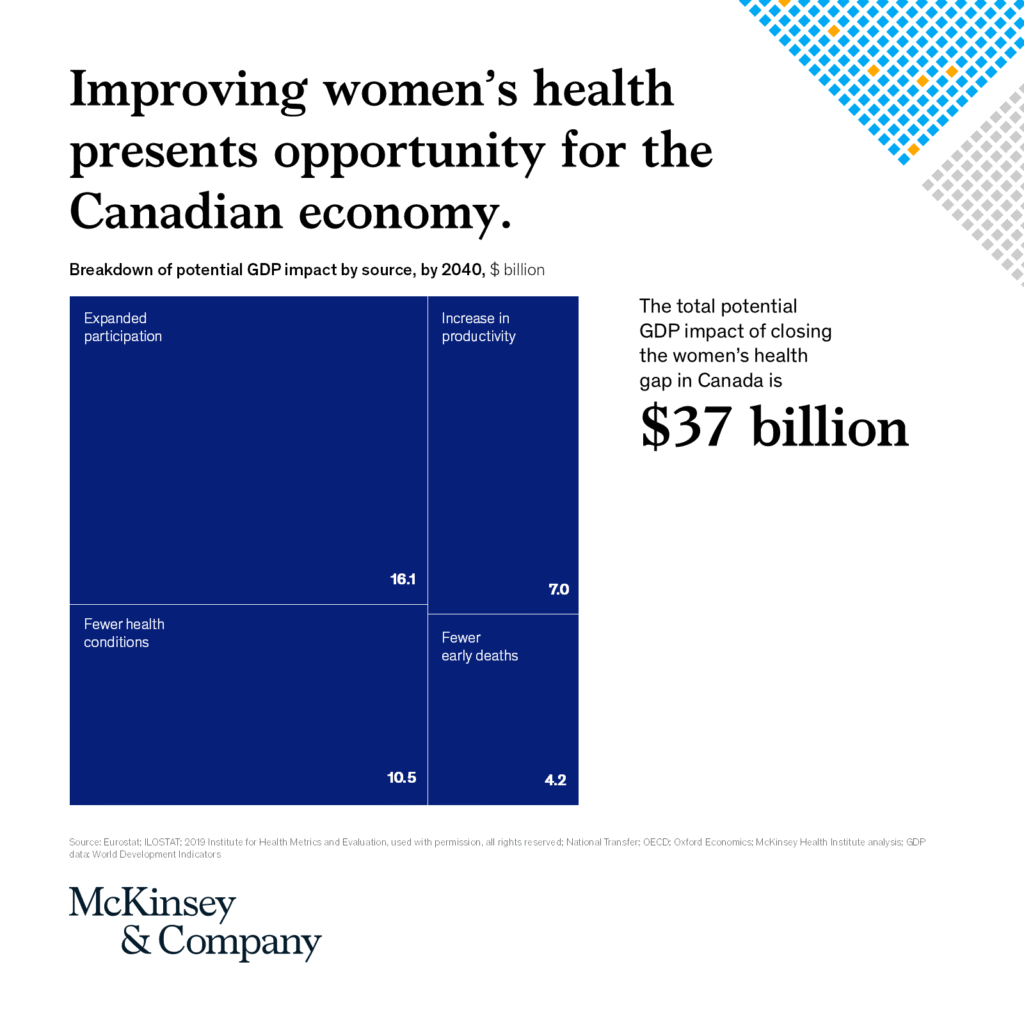
The analysis, Closing the Women’s Health Gap: Canada’s $37 Billion Opportunity, quantifies the economic toll of women’s poorer health outcomes — and the opportunity to close it. By investing in women’s health, Canada could unlock more than $37 billion in additional annual GDP by 2040, while improving quality of life for millions of women and building a stronger, fairer, and healthier Canada.
Drawing on extensive global and national data, the report shows how poorer health among women translates into lost productivity, shorter working lives, and wider inequities — offering one of the clearest pictures yet of how this gap affects both women and Canada’s future.
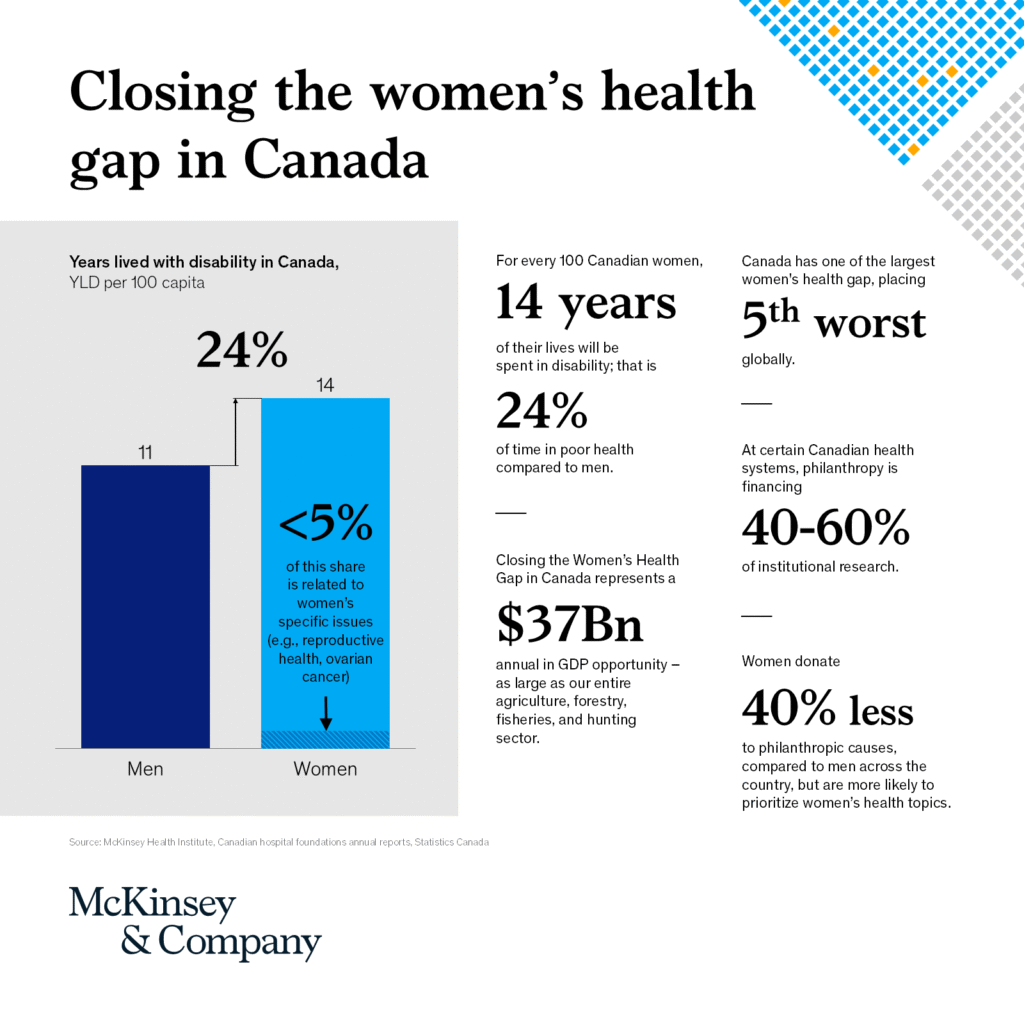
In Canada, the gap is stark. Women spend nearly one-quarter more of their lives in poor health than men (24%) — time that often falls during their most productive working years.
By the numbers
The gap is real — so is the opportunity
Three findings from the McKinsey Health Institute analysis show what's at stake.
24%
Women spend 24% more time in poor health than men. This gap often falls during prime working years, contributing to reduced productivity and financial strain for individuals, families, and the economy.
$37B
$37 billion annual GDP gain possible by 2040. Investing in women's health could add more than $37 billion to Canada's GDP every year by 2040 — while improving quality of life for millions of women across the country.
75%
75% of the economic impact occurs during working years. Three-quarters of the women's health gap's economic toll is linked to lower workforce participation and productivity between the ages of 20 and 70.
In their words
Voices behind the campaign
WHCC and partner leaders on why closing Canada's women's health gap is a national priority.
Every woman deserves to be supported in her health, well-being, and financial confidence — at every stage of life. Our partnership with WHCC is a meaningful way to turn that belief into action and help build a future where women feel supported.
Women make up half the population, but only 5% of global pharmaceutical R&D investment is made towards women's health, and only 1% when excluding cancer-related conditions. We are committed to helping change this reality.
From the report
Dive into the data
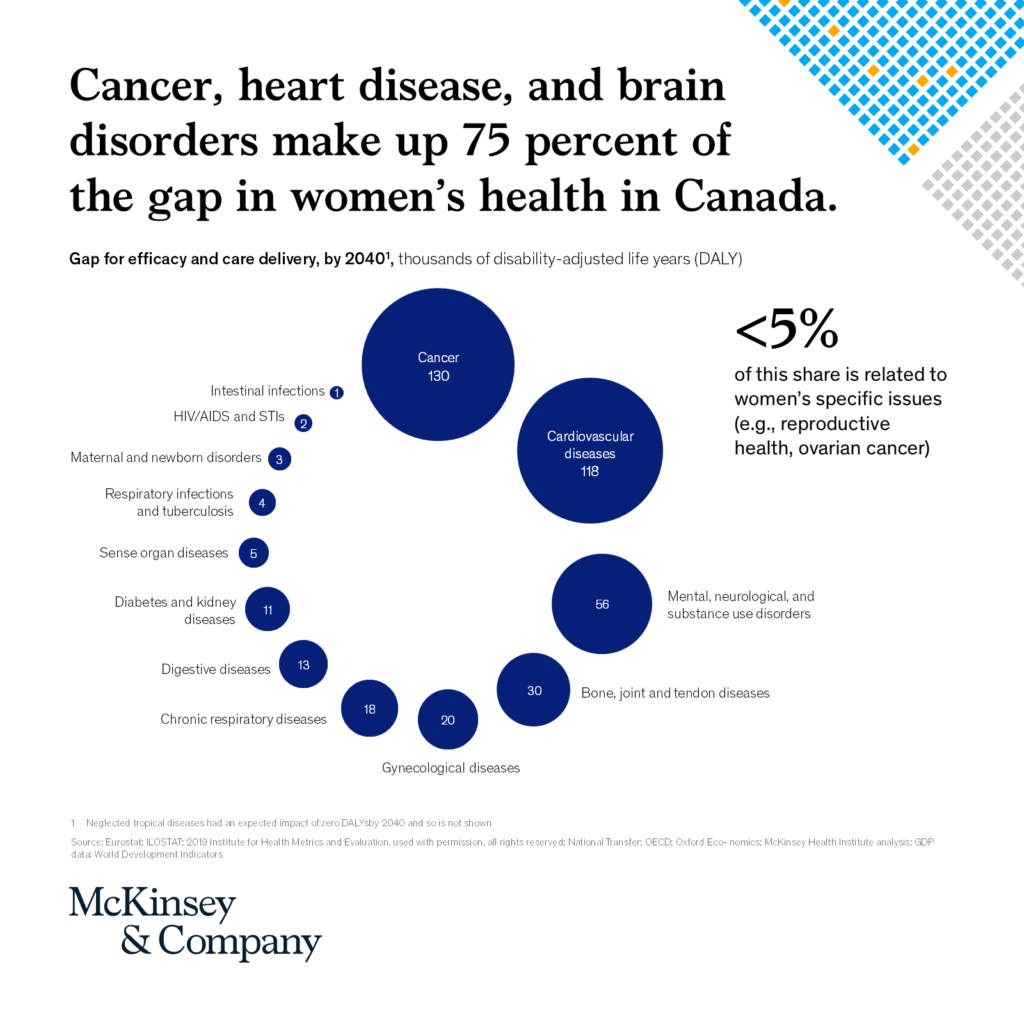
Three views from the McKinsey Health Institute analysis on the scale of the gap and the opportunity to close it.
With support from
Program partners