Why We Need to #InvestInWomen and Bridge the Health Equity Gap
On March 8, International Women’s Day is recognized around the world, celebrating the social, economic, cultural, and political achievements of women. The day is a call to action for accelerating women’s equality which, despite significant progress, demands continued, collaborative effort.
For an article for Healthing.ca, journalist Angelica Bottaro spoke to leaders from WHCC founding foundations about how we can work together to provide better healthcare and equity for women within the healthcare system.
According to data recently collected in the United States, as many as 80 percent of women healthcare workers and 20 percent of patients have experienced some form of discrimination from the healthcare system.
Bottaro asked the three CEOs of WHCC’s founding foundations — Sharlene Rutherford, President & CEO, Alberta Women’s Health Foundation; Leslie McCarley, President & CEO, Women’s College Hospital Foundation, and; Cally Wesson, President & CEO, BC Women’s Health Foundation — about the work of WHCC, why investing in women is so important, and what we can do about it. Read their responses below.
What biases do you think exist in the health research space that make it more difficult for women to access health information based on evidence-backed research?
A woman can make all the right decisions about her health and still be betrayed at her doctor’s office or in the emergency department. Gender bias in health exists—not out of malice but a combination of pervasive old habits by some in the medical community and an historic lack of knowledge, generally, about women’s health. The result is female patients continue to be misdiagnosed, neglected, dismissed as complainers, accused of being overanxious, mislabeled as depressed, or told their symptoms are all in their heads.
The result is limited specialist knowledge and treatment options across a broad range of conditions impacting women and, moreover, have resulted in many women’s health issues being considered taboo. The wide-sweeping societal impacts of keeping women’s health issues taboo are extensively covered in a 2022 thought leadership paper by the Alberta Women’s Health Foundation titled Surveying the Silence and remains a must-read for everyone.
— Sharlene Rutherford, CEO, Royal Alexandra Hospital Foundation
Why do you think inclusivity in research is so important and what do you think are the steps forward in terms of improving research into women’s health?
There is a gap in Canadian healthcare that women have long been falling through—and we need to be there to prevent these omissions and bolster their care. Women’s College Hospital provides informed, excellent, and inclusive care that caters to the unique needs of women—who are the backbones of their communities and families.
Inclusivity in healthcare goes beyond just access to care, encapsulating inclusion in research, education, advocacy, and community—which is our aim through Women’s College Hospital Foundation and Women’s Health Collective Canada. Women make up 51% of the population, yet only 7% of health research funding nationally focuses on their specific needs. We are working to change that.
— Leslie McCarley, CEO, Women’s College Hospital Foundation
What barriers do you see women face in the healthcare system and what do you think are the steps forward in terms of improving research into women’s health?
Women’s health is unique. There are significant differences in how women and men experience health conditions. However, the scientific research guiding medical practices has historically overlooked the crucial impacts of sex and gender in prevention, diagnosis, and treatment. Furthermore, researchers with ground-breaking ideas for advancing women’s health often face barriers in securing initial funding, thus halting their progress.
This is why BC Women’s Health Foundation is launching Women’s Health Research Month, our annual effort to raise funds that support high-quality, high-impact research that produces innovative treatment and increased access to healthcare for women. An investment in women’s health research is a step towards new evidence-based solutions that can inform and transform the health and healthcare of all women.
— Cally Wesson, CEO, BC Women’s Health Foundation
WHCC Celebrates Women’s History Month
This Women’s History Month, WHCC founding foundations hosted several events that shared the common goal of closing the health research gap. See some highlights below.
Alberta Women’s Health Foundation launched the “Inspire Inclusion” campaign with Alberta Blue Cross to “raise awareness of the gaps that continue to exist in women’s health.” The campaign calls for us to “collectively forge a more inclusive world for women.” AWHF also announced new dates for their lecture series “Between Us: Exploring The Mind & Body.” Find out more details here, including information on upcoming discussions.
BC Women’s Health Foundation is devoting the full month of March to women’s health research. Throughout “Women’s Health Research Month,” BCWHF will showcase ground-breaking research in the field, and also highlight the need for more funding. On March 1, the month kicked off with the annual event Illuminations Luncheon presented by RBC Wealth Management, featuring a keynote from Hayley Wickenheiser and a fireside chat featuring Dr. Gina Ogilvie, Dr. Gillian Hanley, and Dr. Wendy Norman.
On March 7, Women’s College Hospital Foundation hosted its annual Women for Women’s Luncheon event. The event connects “champions of women’s health and health equity across Canada in support of the mission and vision of Women’s College Hospital.” The event, which included talks on “The Facts and Fiction of Menopause” and “Rethinking, and Relieving, Chronic Pain,” raised $900,000 to support the work of the hospital.
As part of its seminar series, on March 1, the Partnership for Women’s Health Research Canada hosted “Digital Innovations: Expanding women’s informed choice and access to quality healthcare”. This series seeks to “explore research that is driving advances in healthcare for women, trans and non-binary people.” See the panel here.
Celebrating Black Canadian Leaders in Healthcare
February is Black History Month and this year’s theme is “Black Excellence: A Heritage to Celebrate; a Future to Build”. The theme, “celebrates the rich past and present contributions and accomplishments of Black people in Canada, while aspiring to embrace new opportunities for the future.”
Healthcare in Canada has benefited enormously from the contributions of Black doctors, nurses and researchers who have historically faced major systemic barriers, but persisted nevertheless. For much of the 19th and 20th centuries, Black Canadians were not allowed to access medical education. Trailblazers like Dr. Alexander Thomas Augusta and Bernice Redmon were initially barred from practicing due to their race but overcame this barrier through activism, determination and persistent work, and would go on to make an indelible impact on their field.
This early progress helped open the door to the increased participation of Black doctors, nurses and researchers in Canadian healthcare. Here is a brief timeline of this history, featuring just a few of the Black Canadians who have shaped medical practice and research, and whose achievements have positively impacted all Canadians.
|
Introduction to Anti-Black Racism is a learning module developed by Women’s College Hospital and Dr. Notisha Massaquoi. While education cannot by itself dismantle the systemic inequalities Black people face, it is an important way to raise awareness, create empathy, and spark dialogue.
|
|
| The FYI: A Conversation on Culturally Sensitive Care |
|
| Last month, WHCC hosted a conversation between Kayla Grey and Dr. Aisha Lofters on the importance of culturally sensitive care.
You can learn more about how race can affect a woman’s healthcare experience, and the importance of culturally sensitive care, on the WHCC blog.
|
|
Kayla Grey and Dr. Aisha Lofters on Culturally Sensitive Care
As we ease into the new year, WHCC continues to prioritize our commitment to making the world a healthier and more inclusive place for all through promoting culturally sensitive care. According to the BC Medical Journal, culturally sensitive care involves modifying medical care to account for “language barriers, personal biases and assumptions, and lack of knowledge.”
These practices are especially important in a country with a population as diverse as Canada’s. By respecting and responding to the unique needs of women in Canada, we can create a more effective and equitable healthcare system.
To explore this topic, WHCC hosted a conversation on the importance of culturally sensitive care and healthcare equity between sports broadcaster and health advocate Kayla Grey and Dr. Aisha Lofters, a globally recognized leader in health equity research.
Kayla is the host of TSN’s The Shift with Kayla Grey, a regular anchor of SportsCentre, and a courtside reporter for TSN’s live coverage of the Toronto Raptors. In 2018, Kayla became the first Black woman to host a flagship sports highlight show in Canada when she made her SportsCentre debut. In 2022, she received the Change Maker Award from the Academy of Canadian Cinema & Television.
Dr. Aisha Lofters is Chair in Implementation Science at The Peter Gilgan Centre for Women’s Cancers at Women’s College Hospital, and an associate professor at the University of Toronto. In 2021, Dr. Lofters co-founded Every Breast Counts, a cancer resource hub for Black women. In 2022, Dr. Lofters was awarded the prestigious Inclusive Excellence Prize for her contributions to promoting equitable and inclusive cancer care in Canada.
Find the first clip from Kayla Grey and Dr. Lofters’ conversation here, where they talk about the need for more women doctors of colour. Stay tuned for more enlightening clips from their conversation on WHCC social channels this month.
Happy Holidays | Talking Heart Health with Dr. Colleen Norris
Welcome to our final newsletter of 2023. We’d like to wish you and your family a very happy holiday season full of joy and good health!
As the holiday season brings us closer to our loved ones, it’s a poignant reminder of the importance of good health.
Heart disease is the leading cause of premature death in women in Canada, yet many women are unaware of the risks and signs that are unique to them.
In the latest episode of the Rebel Mama Hotline, “What’s Up With Women’s Heart Health?” produced in collaboration with WHCC, the Rebel Mama spoke to Dr. Colleen Norris, about how women’s heart health is different than men’s.
Dr. Colleen Norris is the Cavarzan Chair in Mature Women’s Health Research, Lois Hole Hospital for Women, and a member of the Women and Children’s Health Research Institute. Dr Norris is a professor and associate dean of research with the Faculty of Nursing and holds appointments with the Division of Cardiology, the Department of Obstetrics & Gynecology and Medicine, and School of Public Health. She is the past Chair of the Canadian Women’s Heart Health Alliance, Health Policy and Services Working Group. Dr. Norris is internationally recognized for her leadership in sex and gender science and in developing and disseminating evidence informed strategies to transform clinical practice and impact public policy related to women’s health.
In this episode, Dr. Norris talks about the symptoms and causes of women’s heart disease and explains how gender (as opposed to sex) affects women’s chances of developing heart-related health issues. For example, women tend to experience more stress, discrimination, and caregiving responsibilities than men, which can increase their risk of heart disease. Dr. Norris also shares tips on how women can prevent and manage heart disease, such as being physically active, eating well, and seeking help when needed.
Listen to the podcast episode here and learn more about the Rebel Mama here. You can also listen to previous episodes from the WHCC x Rebel Mama series which covers important topics like sex and mindfulness, menopause, pregnancy and mental health, and hormones.
Happy Holidays | Talking Heart Health with Dr. Colleen Norris
Welcome to our final newsletter of 2023. We’d like to wish you and your family a very happy holiday season full of joy and good health! As the holiday season brings us closer to our loved ones, it’s a poignant reminder of the importance of good health. Heart disease is the leading cause of premature death in women in Canada, yet many women are unaware of the risks and signs that are unique to them. In the latest episode of the Rebel Mama Hotline, “What’s Up With Women’s Heart Health?” produced in collaboration with WHCC, the Rebel Mama spoke to Dr. Colleen Norris, about how women’s heart health is different than men’s. Dr. Colleen Norris is the Cavarzan Chair in Mature Women’s Health Research, Lois Hole Hospital for Women, and a member of the Women and Children’s Health Research Institute. Dr Norris is a professor and associate dean of research with the Faculty of Nursing and holds appointments with the Division of Cardiology, the Department of Obstetrics & Gynecology and Medicine, and School of Public Health. She is the past Chair of the Canadian Women’s Heart Health Alliance, Health Policy and Services Working Group. Dr. Norris is internationally recognized for her leadership in sex and gender science and in developing and disseminating evidence informed strategies to transform clinical practice and impact public policy related to women’s health. In this episode, Dr. Norris talks about the symptoms and causes of women’s heart disease and explains how gender (as opposed to sex) affects women’s chances of developing heart-related health issues. For example, women tend to experience more stress, discrimination, and caregiving responsibilities than men, which can increase their risk of heart disease. Dr. Norris also shares tips on how women can prevent and manage heart disease, such as being physically active, eating well, and seeking help when needed. Listen to the podcast episode here and learn more about the Rebel Mama here. You can also listen to previous episodes from the WHCC x Rebel Mama series which covers important topics like sex and mindfulness, menopause, pregnancy and mental health, and hormones.
WHCC partners with Shoppers Foundation for Women’s Health™ to Support Women’s Health Research
Women’s Health Collective Canada is proud to once again partner with Shoppers Foundation for Women’s Health™ to raise critical funds for women’s health research. Until December 31, Shoppers Drug Mart® customers have the option to contribute to Shoppers Foundation for Women’s Health™ in-store at self check-out or on-line at shoppersfoundation.ca.
The partnership will also involve a $500,000 donation from the Shoppers Foundation for Women’s Health™, helping advance equity, excellence, and inclusion in research through WHCC and its members: Alberta Women’s Health Foundation, BC Women’s Health Foundation, and Women’s College Hospital Foundation.
The partnership was announced in November at the WHCC National Summit: Pathways to Equity, presented by Shoppers Foundation for Women’s Health™ in Edmonton, a gathering of researchers from the Partnership for Women’s Health Research Canada and women’s health advocates. This is the second consecutive year Shoppers Drug Mart® has partnered with WHCC in support of women’s health. In 2022, Shoppers Drug Mart® partnered with WHCC and raised over $600,000.
“The mission of WHCC is to advance women’s health research and create more visibility around the current lack of data,” said Sharlene Rutherford, President and CEO, Alberta Women’s Health Foundation. “Joining forces with Shoppers Drug Mart® and Shoppers Foundation for Women’s Health™ helps us reach an even greater number of Canadians and make meaningful differences in the lives of women across the country.”
“Shoppers Foundation for Women’s Health™ is committed to fostering health equity for all women across Canada,” said Paulette Minard, Director, Community Investment, Shoppers Foundation for Women’s Health™. “Achieving this goal begins with better understanding the true nature of the inequities that exist, to help build a path towards resolution. Too little data exists in this regard, which is why we are pleased to be able to support Women’s Health Collective Canada and their members with their important work.”
To stay updated on the partnership’s progress and initiatives, please visit the Women’s Health Collective Canada website at www.whcc.ca and follow Shopper’s Drug Mart’s® social media channels.
About Shoppers Foundation for Women’s Health™
Shoppers Foundation for Women’s Health™ – the charitable arm of Shoppers Drug Mart® – is committed to helping Canadian women lead healthier lives, by making care more equitable and accessible. The Foundation will invest $50M by 2026 to address some of the most pressing health inequities facing women, including lack of representation in health research, barriers to accessing mental healthcare, and the urgent consequences women disproportionately face due to poverty and domestic violence. Learn more at shoppersfoundation.ca.
Dr. Erin Kelly on Women’s Pain Management + A Recap of the WHCC Summit
Pain is a complex and multifaceted experience that can be influenced by various factors. Chronic pain, which is defined as pain that persists for more than three months, is a common and debilitating condition that affects millions of people worldwide. Studies have found that women are more likely than men to experience chronic pain. Women are biologically disposed to painful diseases to painful diseases, such as fibromyalgia, endometriosis, interstitial cystitis, vulvodynia, and temporomandibular disorders (TMJ).
While troubling, these statistics are a first step in addressing the systemic issue of women’s pain, for we can only begin treatment if we know there is an issue. At WHCC’s member institutes, researchers are furthering our knowledge about both the incidence of pain among women as well as its treatment.
One of these researchers is Dr. Erin Kelly, a Urogynecologist at the Lois Hole Hospital for Women at the Royal Alexandra Hospital and the Fellowship Program Director for the Female Pelvic Medicine and Reconstructive Surgery program at the University of Alberta. Dr. Kelly’s research interests in chronic pelvic pain management and surgery for pelvic floor disorders are particularly relevant to women’s health. Her work aims to improve the quality of life for women who suffer from these conditions by developing new treatments and improving existing ones.
This interview has been edited for clarity.
WHCC: Could you share the areas of your research about pain awareness?
Dr. Kelly: Shortly after I joined the Chronic Pelvic Pain program at the Lois Hole Hospital in Edmonton, we started work on a project to investigate patients’ attitudes [about] and perceptions of medical cannabis for the treatment of chronic pelvic pain. The results were fascinating. First, there was little to no research on cannabis for the treatment of chronic pelvic pain syndromes, and second, over fifty percent of the patients who participated in our survey were using cannabis as an adjunct to the medical treatment of their chronic pelvic pain. Furthermore, of those women who did not routinely use cannabis to manage their pelvic pain, fifty percent were interested in trying it.
This suggests to me that women are not getting adequate medical management of their pelvic pain through traditional medical therapies, and are having to look on their own, outside of traditional medical care. In this respect, I worry we are failing our chronic pelvic pain patients, by not exploring a broader range of therapeutic options.
This realization prompted us to write an editorial to the Journal of Obstetrics and Gynecology of Canada calling for more openness to the study of medical cannabis use for the management of chronic pelvic pain. Our hope was to bring awareness to the complexity of this pain syndrome, the struggle to find adequate therapeutic modalities to treat it, and to advocate for more studies of medical cannabis to manage chronic pelvic pain.
WHCC: What are some common misconceptions patients have about pain in urogynecological conditions?
Dr. Kelly: I think the most prominent misconception about pain in urogynecological conditions is that surgery is often curative for chronic pelvic pain. I do wish that chronic pain was this simple and that a surgery could indefinitely cure chronic pelvic pain for our patients. Then our patients could quickly move on to a better quality of life and not look back. In rare situations — for instance, with pain that is solely associated with vaginal mesh (noted by clinical findings on examination) — pelvic pain can be improved significantly with surgical excision.
Unfortunately, it is much more common that chronic pelvic pain either does not resolve completely with surgery, or is made worse by surgery. Chronic pelvic pain is complex and multifactorial, and while it can often be well-managed with a multimodal approach, it is rarely ever cured. Good management of chronic pelvic pain requires treating and seeing the whole patient. It requires recognizing the personal and social context in which the patient is suffering.
That is why taking the biopsychosocial approach to managing chronic pelvic pain is most effective. A biopsychosocial approach means involving multidisciplinary clinical teams to not only address the medical management of chronic pain but also the psychosocial aspects as well.
WHCC: What are some challenges you face in managing pain in urogynecological patients?
Dr. Kelly: In our program, our biggest challenge to managing pelvic pain is all of the barriers our patients face to getting the treatment that they need. These barriers range from the stigma surrounding pelvic health disorders to extremely long wait times to access care, to social, economic, and geographical barriers. It is heart-breaking to hear how our patients’ pain has been dismissed or diminished by other healthcare practitioners, and we try to advocate for them on both an interpersonal and societal level, to decrease the stigma and misconceptions around chronic pelvic pain syndromes.
It is frustrating to know how long they wait to see us in the Chronic Pelvic Pain Program, and we are constantly looking at ways to improve our ability to see more patients in consultation. But we only have so much capacity. Often, it is social, economic, and geographical barriers that prevent patients from accessing the healthcare they need to address the psychosocial aspects of their pain. Without addressing these aspects of pain, it is hard — if not impossible — for patients to reach levels of empowerment and self-efficacy as far as their pain.
WHCC: How do you approach educating your patients about pain and its management?
Dr. Kelly: In our Chronic Pelvic Pain Program at the Lois Hole Hospital for Women in Edmonton, we focus on dispelling misconceptions about chronic pelvic pain and providing reliable education. This ranges from individual teaching during clinical visits, to guiding patients to reliable web and social media resources, to structured pain education classes that are facilitated through our program.
This also includes community talks, such as the recent Women’s Health Research Seminar, organized by Women’s Health Collective of Canada and Partners for Women’s Health Research, the aim of which is to raise awareness, educate, and advocate.
WHCC: Are there any recent advancements in pain management that you find promising?
Dr. Kelly: Absolutely! I think as chronic pain providers, we are well aware that chronic pain is a multidimensional, multifaceted experience that cannot only be treated with medicine and surgery. The biopsychosocial model illustrates this perfectly, and for a long time, the treatment of pain has focused on treating biology alone.
As chronic pain practitioners, we have been promoting and advocating for better management of the psychological and sociological aspects of chronic pain. This is why I am very excited about the current research work of my partners, Dr. Annick Poirier and Dr. May Sanaee. Dr. Poirier has helped to establish the Mind-Body Integration program (also known as the Hypnosis program) within our clinic. Hypnosis is a therapeutic technique that aims to create a state of consciousness involving focused attention and reduced peripheral awareness characterized by an enhanced capacity for response to suggestion. It has been shown to decrease pain and improve quality of life in patients with chronic pain.
Dr. Poirier is investigating the perspectives and attitudes of practitioners and patients towards this initiative using qualitative methods. I believe her results are going to clearly point out the gap in psychosocial aspects of pain that the traditional medical approach fails to address. Her results will have a significant impact on how we manage chronic pelvic pain.
Dr. Sanaee brought the Mindfulness Cognitive Behavioural Therapy course, which she learned from Dr. Lori Brotto at the University of British Columbia, to our program. Cognitive Behavioural Therapy is centered on challenging maladaptive pain-related cognitions, change-oriented psychoeducation, and behavioral interventions. Mindfulness therapy uses an acceptance-based approach. Mindfulness has been increasingly used alongside CBT for a variety of chronic pain conditions. This therapy program has been extremely well-received by our patients, and as practitioners, we are also seeing the benefits. [Dr. Sanaee] plans to study the virtual delivery of this course, with the hope that she can expand the delivery of this therapy to a broader patient group.
I am very excited to see my colleagues, among many others, studying treatments to address the psychosocial aspects of chronic pelvic pain.
WHCC: What do you think is the role of healthcare professionals in advocating for improved pain management practice?
Dr. Kelly: Stigma is the biggest barrier to better care for women with chronic pelvic pain. Women should be taught about their bodies from an early age, so they have the words to bring up their concerns confidently with their healthcare providers. Women should never be made to feel shame or guilt when discussing their pelvic health concerns.
This requires that healthcare providers routinely ask about pelvic floor health, in a supportive and non-judgmental way. Healthcare providers should also have the basic tools to support their patients through diagnosis and treatment. On a broader scale, we need to bravely speak up about our own pelvic health concerns and listen closely to those who are speaking about theirs. We need to advocate for more robust research initiatives, more education, and better access to care for women with pelvic floor disorders so that women can be empowered about their pelvic floor health.
WHCC: In your experience, how does chronic pain affect the quality of life for those with urogynecological conditions?
Dr. Kelly: Chronic pelvic pain is a debilitating condition that can affect every aspect of a woman’s life. Chronic pelvic pain often results in significant impairments in daily functioning, vocational functioning, family dynamics, and intimate relationships. This can lead to financial stress, relationship discord, and a lack of socialization and support. Chronic pelvic pain can be a very isolating and lonely experience.
WHCC: Are there specific goals you hope to achieve in your work in the coming years?
Dr. Kelly: In the coming years, my colleagues and I hope to build a more robust Chronic Pelvic Pain program here in Edmonton, where our patients not only receive medical care for their chronic pelvic pain but where the psychosocial aspects of their pain experience are addressed as well. From a research standpoint, we hope to continue to study the medical, physical, psychological, and sociological aspects of chronic pelvic pain, in the hopes of finding better approaches to treatment of this complex and multifaceted condition.
Finally, we cannot make a significant impact without advocacy. By working with local and national organizations, such as the Women’s Health Collective, we hope to reduce the stigma associated with chronic pelvic pain and to raise the voices of those suffering so that they can be seen and heard.
Earlier in the month, the Alberta Women’s Health Foundation hosted the Women’s Health Collective Canada (WHCC) National Summit in Edmonton. The Summit was presented by the Shoppers Foundation for Women’s Health™ and was the Collective’s first Summit in a post-pandemic era. A recap video can be found here, courtesy of the Royal Alexandra Hospital Foundation.
The Summit, which took place November 20th and 21st, aimed to chart a path for the work that lies ahead seeking equity in and the advancement of women’s health research. The two-day Summit brought together the three WHCC founding members and research partner institutions, the Women’s Health Research Institute, Women and Children’s Health Research Institute, Women’s College Research Institute, and IWK Health, who make up the Partnership for Women’s Health Research Canada (PWHR).
Participants celebrated the work accomplished since the Collective was formed in 2019, sharing their research and latest findings. They also looked to the future, discussing how to systemically advance women’s health research and build a strategy to engage new partners from across Canada. A clip from CTV News Edmonton live from the WHCC Summit is viewable here.
Dr. Erin Kelly on Women’s Pain Management + A Recap of the WHCC Summit
Pain is a complex and multifaceted experience that can be influenced by various factors. Chronic pain, which is defined as pain that persists for more than three months, is a common and debilitating condition that affects millions of people worldwide. Studies have found that women are more likely than men to experience chronic pain. Women are biologically disposed to painful diseases to painful diseases, such as fibromyalgia, endometriosis, interstitial cystitis, vulvodynia, and temporomandibular disorders (TMJ). While troubling, these statistics are a first step in addressing the systemic issue of women’s pain, for we can only begin treatment if we know there is an issue. At WHCC’s member institutes, researchers are furthering our knowledge about both the incidence of pain among women as well as its treatment. One of these researchers is Dr. Erin Kelly, a Urogynecologist at the Lois Hole Hospital for Women at the Royal Alexandra Hospital and the Fellowship Program Director for the Female Pelvic Medicine and Reconstructive Surgery program at the University of Alberta. Dr. Kelly’s research interests in chronic pelvic pain management and surgery for pelvic floor disorders are particularly relevant to women’s health. Her work aims to improve the quality of life for women who suffer from these conditions by developing new treatments and improving existing ones. This interview has been edited for clarity. WHCC: Could you share the areas of your research about pain awareness? Dr. Kelly: Shortly after I joined the Chronic Pelvic Pain program at the Lois Hole Hospital in Edmonton, we started work on a project to investigate patients’ attitudes [about] and perceptions of medical cannabis for the treatment of chronic pelvic pain. The results were fascinating. First, there was little to no research on cannabis for the treatment of chronic pelvic pain syndromes, and second, over fifty percent of the patients who participated in our survey were using cannabis as an adjunct to the medical treatment of their chronic pelvic pain. Furthermore, of those women who did not routinely use cannabis to manage their pelvic pain, fifty percent were interested in trying it. This suggests to me that women are not getting adequate medical management of their pelvic pain through traditional medical therapies, and are having to look on their own, outside of traditional medical care. In this respect, I worry we are failing our chronic pelvic pain patients, by not exploring a broader range of therapeutic options. This realization prompted us to write an editorial to the Journal of Obstetrics and Gynecology of Canada calling for more openness to the study of medical cannabis use for the management of chronic pelvic pain. Our hope was to bring awareness to the complexity of this pain syndrome, the struggle to find adequate therapeutic modalities to treat it, and to advocate for more studies of medical cannabis to manage chronic pelvic pain. WHCC: What are some common misconceptions patients have about pain in urogynecological conditions? Dr. Kelly: I think the most prominent misconception about pain in urogynecological conditions is that surgery is often curative for chronic pelvic pain. I do wish that chronic pain was this simple and that a surgery could indefinitely cure chronic pelvic pain for our patients. Then our patients could quickly move on to a better quality of life and not look back. In rare situations — for instance, with pain that is solely associated with vaginal mesh (noted by clinical findings on examination) — pelvic pain can be improved significantly with surgical excision. Unfortunately, it is much more common that chronic pelvic pain either does not resolve completely with surgery, or is made worse by surgery. Chronic pelvic pain is complex and multifactorial, and while it can often be well-managed with a multimodal approach, it is rarely ever cured. Good management of chronic pelvic pain requires treating and seeing the whole patient. It requires recognizing the personal and social context in which the patient is suffering. That is why taking the biopsychosocial approach to managing chronic pelvic pain is most effective. A biopsychosocial approach means involving multidisciplinary clinical teams to not only address the medical management of chronic pain but also the psychosocial aspects as well. WHCC: What are some challenges you face in managing pain in urogynecological patients? Dr. Kelly: In our program, our biggest challenge to managing pelvic pain is all of the barriers our patients face to getting the treatment that they need. These barriers range from the stigma surrounding pelvic health disorders to extremely long wait times to access care, to social, economic, and geographical barriers. It is heart-breaking to hear how our patients’ pain has been dismissed or diminished by other healthcare practitioners, and we try to advocate for them on both an interpersonal and societal level, to decrease the stigma and misconceptions around chronic pelvic pain syndromes. It is frustrating to know how long they wait to see us in the Chronic Pelvic Pain Program, and we are constantly looking at ways to improve our ability to see more patients in consultation. But we only have so much capacity. Often, it is social, economic, and geographical barriers that prevent patients from accessing the healthcare they need to address the psychosocial aspects of their pain. Without addressing these aspects of pain, it is hard — if not impossible — for patients to reach levels of empowerment and self-efficacy as far as their pain. WHCC: How do you approach educating your patients about pain and its management? Dr. Kelly: In our Chronic Pelvic Pain Program at the Lois Hole Hospital for Women in Edmonton, we focus on dispelling misconceptions about chronic pelvic pain and providing reliable education. This ranges from individual teaching during clinical visits, to guiding patients to reliable web and social media resources, to structured pain education classes that are facilitated through our program. This also includes community talks, such as the recent Women’s Health Research Seminar, organized by Women’s Health Collective of Canada and Partners for Women’s Health Research, the aim of which is to raise awareness, educate, and advocate. WHCC: Are there any recent advancements in pain management that you find promising? Dr. Kelly: Absolutely! I think as chronic pain providers, we are well aware that chronic pain is a multidimensional, multifaceted experience that cannot only be treated with medicine and surgery. The biopsychosocial model illustrates this perfectly, and for a long time, the treatment of pain has focused on treating biology alone. As chronic pain practitioners, we have been promoting and advocating for better management of the psychological and sociological aspects of chronic pain. This is why I am very excited about the current research work of my partners, Dr. Annick Poirier and Dr. May Sanaee. Dr. Poirier has helped to establish the Mind-Body Integration program (also known as the Hypnosis program) within our clinic. Hypnosis is a therapeutic technique that aims to create a state of consciousness involving focused attention and reduced peripheral awareness characterized by an enhanced capacity for response to suggestion. It has been shown to decrease pain and improve quality of life in patients with chronic pain. Dr. Poirier is investigating the perspectives and attitudes of practitioners and patients towards this initiative using qualitative methods. I believe her results are going to clearly point out the gap in psychosocial aspects of pain that the traditional medical approach fails to address. Her results will have a significant impact on how we manage chronic pelvic pain. Dr. Sanaee brought the Mindfulness Cognitive Behavioural Therapy course, which she learned from Dr. Lori Brotto at the University of British Columbia, to our program. Cognitive Behavioural Therapy is centered on challenging maladaptive pain-related cognitions, change-oriented psychoeducation, and behavioral interventions. Mindfulness therapy uses an acceptance-based approach. Mindfulness has been increasingly used alongside CBT for a variety of chronic pain conditions. This therapy program has been extremely well-received by our patients, and as practitioners, we are also seeing the benefits. [Dr. Sanaee] plans to study the virtual delivery of this course, with the hope that she can expand the delivery of this therapy to a broader patient group. I am very excited to see my colleagues, among many others, studying treatments to address the psychosocial aspects of chronic pelvic pain. WHCC: What do you think is the role of healthcare professionals in advocating for improved pain management practice? Dr. Kelly: Stigma is the biggest barrier to better care for women with chronic pelvic pain. Women should be taught about their bodies from an early age, so they have the words to bring up their concerns confidently with their healthcare providers. Women should never be made to feel shame or guilt when discussing their pelvic health concerns. This requires that healthcare providers routinely ask about pelvic floor health, in a supportive and non-judgmental way. Healthcare providers should also have the basic tools to support their patients through diagnosis and treatment. On a broader scale, we need to bravely speak up about our own pelvic health concerns and listen closely to those who are speaking about theirs. We need to advocate for more robust research initiatives, more education, and better access to care for women with pelvic floor disorders so that women can be empowered about their pelvic floor health. WHCC: In your experience, how does chronic pain affect the quality of life for those with urogynecological conditions? Dr. Kelly: Chronic pelvic pain is a debilitating condition that can affect every aspect of a woman’s life. Chronic pelvic pain often results in significant impairments in daily functioning, vocational functioning, family dynamics, and intimate relationships. This can lead to financial stress, relationship discord, and a lack of socialization and support. Chronic pelvic pain can be a very isolating and lonely experience. WHCC: Are there specific goals you hope to achieve in your work in the coming years? Dr. Kelly: In the coming years, my colleagues and I hope to build a more robust Chronic Pelvic Pain program here in Edmonton, where our patients not only receive medical care for their chronic pelvic pain but where the psychosocial aspects of their pain experience are addressed as well. From a research standpoint, we hope to continue to study the medical, physical, psychological, and sociological aspects of chronic pelvic pain, in the hopes of finding better approaches to treatment of this complex and multifaceted condition. Finally, we cannot make a significant impact without advocacy. By working with local and national organizations, such as the Women’s Health Collective, we hope to reduce the stigma associated with chronic pelvic pain and to raise the voices of those suffering so that they can be seen and heard.
Earlier in the month, the Alberta Women’s Health Foundation hosted the Women’s Health Collective Canada (WHCC) National Summit in Edmonton. The Summit was presented by the Shoppers Foundation for Women’s Health™ and was the Collective’s first Summit in a post-pandemic era. A recap video can be found here, courtesy of the Royal Alexandra Hospital Foundation. The Summit, which took place November 20th and 21st, aimed to chart a path for the work that lies ahead seeking equity in and the advancement of women’s health research. The two-day Summit brought together the three WHCC founding members and research partner institutions, the Women’s Health Research Institute, Women and Children’s Health Research Institute, Women’s College Research Institute, and IWK Health, who make up the Partnership for Women’s Health Research Canada (PWHR). Participants celebrated the work accomplished since the Collective was formed in 2019, sharing their research and latest findings. They also looked to the future, discussing how to systemically advance women’s health research and build a strategy to engage new partners from across Canada. A clip from CTV News Edmonton live from the WHCC Summit is viewable here.
The History and Future of Ovarian Cancer Research
Isaac Newton famously wrote that he “stood on the shoulders of giants”. The same can be said of the groundbreaking research conducted by WHCC-affiliated institutes, which exists in a long tradition of discoveries and investigations.
Ovarian cancer research is one example. While it remains one of the leading causes of cancer deaths in women, there have been important advances in research about it over the last two hundred years.
Here is a timeline of some of the important discoveries that have brought us to this point.
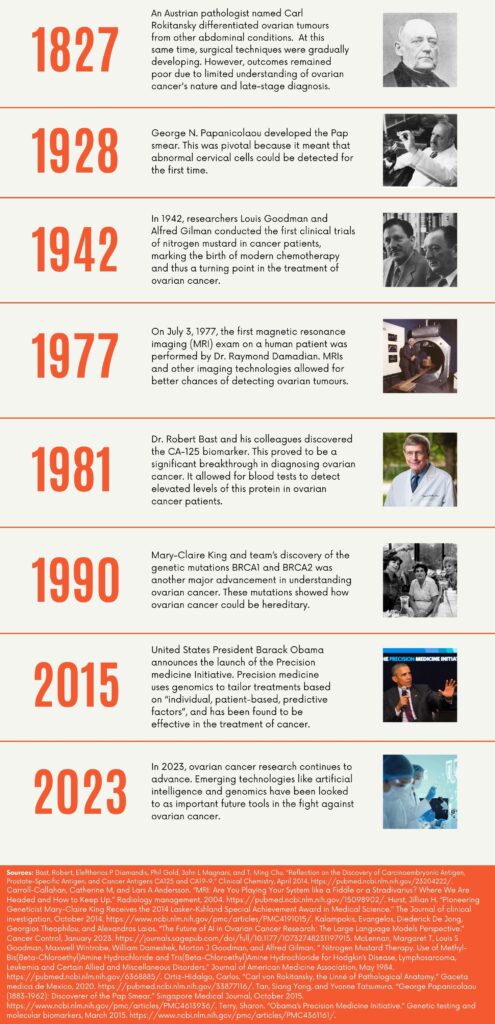
WHCC’s mission is to support the kind of rigorous research that has unraveled the complexities of this disease. Our researchers at Women’s Health Research Institute (BC), Women and Children’s Health Research Institute (Alberta), and Women’s College Research Institute (Ontario), are continuing the trailblazing work that began all those years ago.
Knowing Yourself: Genetics and Health
Genes are segments of DNA containing instructions for building and maintaining humans. Alterations in DNA sequences — referred to as mutations — can impact a person’s health. Some mutations are related to environmental factors while others are inherited, according to the Canadian Medical Association Journal.
The occurrence of specific genetic characteristics varies among groups, and may be correlated with race, ethnicity or sex. There are several genetic conditions that specifically affect women.
For example, everyone inherits two copies of the BRCA1 and BRCA2 genes at birth. These genes help control normal cell growth. In some cases, people inherit mutations in these genes, which puts them at a greater risk for “breast and ovarian cancers as well as some other cancers, such as prostate and pancreatic cancers.” In fact, BRCA mutations “predispose women to a higher lifetime risk of breast (up to 80%) and ovarian cancer (up to 20 – 40%).”
The discovery of BRCA in the early 1990s allowed patients and doctors to better understand the risk associated with certain types of cancers. Screening and management options are available to “reduce the risk of developing cancer, detect cancer at an early stage, and identify more targeted treatments.”
Researchers at Women’s College Research Institute have identified three major clinical gaps in these screening and management options. These include:
- The limited portion of the population that is eligible for testing under the eligibility criteria.
- The fact that “hereditary cancer genetic testing is often offered to patients too late, with most tests done after a patient has been diagnosed with cancer.”
- Genetic testing being offered after cancer treatment has been completed. Ideally, knowing mutation status before or at the time of cancer diagnosis can help a patient and their medical team decide on the best course of treatment.
To bridge these gaps, Women’s College Research Institute launched a research study called The Screen Project, which provides access to population-based genetic testing.
Genetic disorders are also “one of the leading causes of infant mortality,” according to the BC Women’s Health Foundation, due to infants being impacted by mutations, irregularities in gene sequences or inherited issues from their parents.
The Provincial Medical Genetics Program (PMGP) at the BC Women’s Hospital + Health Centre provides access to “precise, patient-specific treatment plans for expectant mothers that can save a newborn’s life upon delivery; critically-ill infants in the NICU; babies born with a genetic cancer susceptibility syndrome; patients with genetic eye-disorders and more.”
Sometimes, a patient might not know they are carrying a genetic disorder. This was one reason for the launch of the Translational Genomics Hub at the Women & Children’s Health Research Institute in Alberta.
According to its leader Dr. Oana Caluseriu, the Hub wants “clinicians who have patients whose disease is likely due to a genomics cause, to be able to ask questions of researchers who have expertise with that gene or pathway in a lab.”
This allows clinicians the ability to offer patients better care, anticipate future problems, introduce specific treatments, and counsel the family about similar risks, if necessary.
Across Canada, researchers supported by WHCC member foundations are doing crucial and pioneering research to advance our understanding of genetic disorders, ensuring patients know tomorrow’s risks today.
Upcoming Events
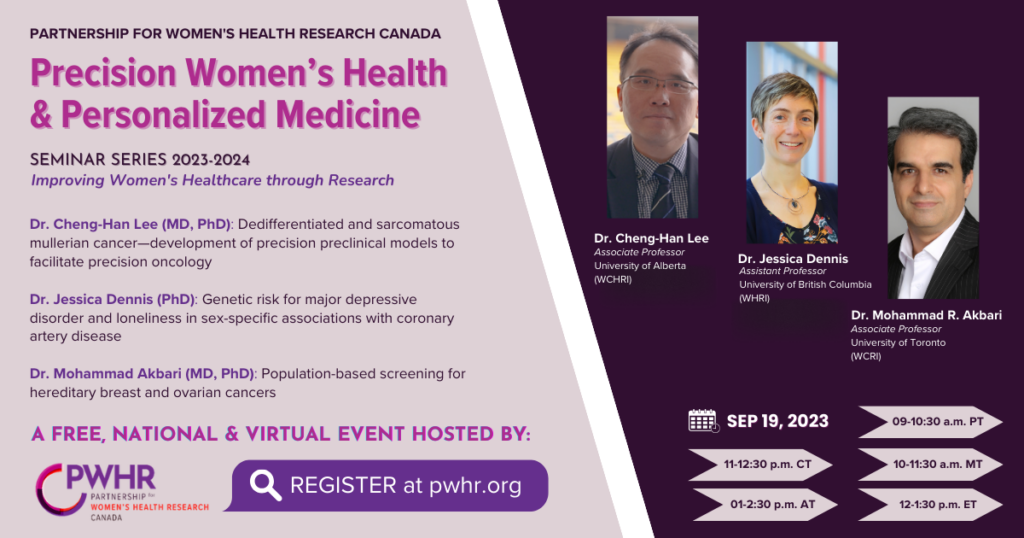 September 19, 2023
9:00AM – 10:30AM PST
Are you passionate about the health of women, trans, and non-binary individuals? Are you eager to learn about ground-breaking research that is shaping the future of healthcare?
We’re thrilled to invite you to the 2023-2024 PWHR Women’s Health Research Seminar Series, an opportunity to learn about some of the latest advancements in women’s health research, and their impact on healthcare. For more information, check out the PWHR website.
Register via Eventbrite!

November 2, 2023
5:30PM – 9:00PM EST
Join us for a transformative evening of education and networking while exploring the unique needs and issues in Black women’s health. The third Black Women’s Healthcare Summit, presented by Scotiabank, is a gathering place for those who believe in allyship, advocacy, and action surrounding Black women’s health, the health of their families, and their communities.
You will learn about the unique challenges that members of the Black community, particularly women, face due to the intersectionality of race, gender and health and how Women’s College Hospital is moving the dial on these issues.
Purchase your early bird tickets today!


